Wisereads Vol. 170 — Moral Ambition by Rutger Bregman, Noah Smith on Bumbition, and more
Last week, we shared a collection of Ralph Waldo Emerson's essays, including Self-Reliance, Compensation, and The Over-Soul. This week, we're sharing a preview of an on-sale title by Rutger Bregman, Moral Ambition: Stop wasting your talent and start making a difference.
Keep reading to add to your Reader account below 👇
Most highlighted Articles of the week

Obituaries
Jensen Huang's resignation reads as a string of obituaries in tech analyst Ben Thompson's telling. "Nvidia's most important moat, however, was the degree to which it was not a normal company. Huang organized Nvidia as an exoskeleton around one man: himself... And, now that he is gone, the exoskeleton is much more poised to collapse than you might expect."

Bumbition
Steve Jobs, Jack Dorsey, Charles Darwin, James Cameron, and countless other successful figures had what economist Noah Smith calls "bumbition," a portmanteau of "bum" and "ambition." "Time away from the grind of constant striving allows people to broaden their perspective. A lot of unique and original ideas come from recombinant innovation — from combining insights and perspectives from vastly different fields. Even something as simple as changing the context of your surroundings can improve creativity. For an intelligent person with a restless mind, the 'bum' phase of life leads to a lot of play and exploration that can end up sparking novel ideas."
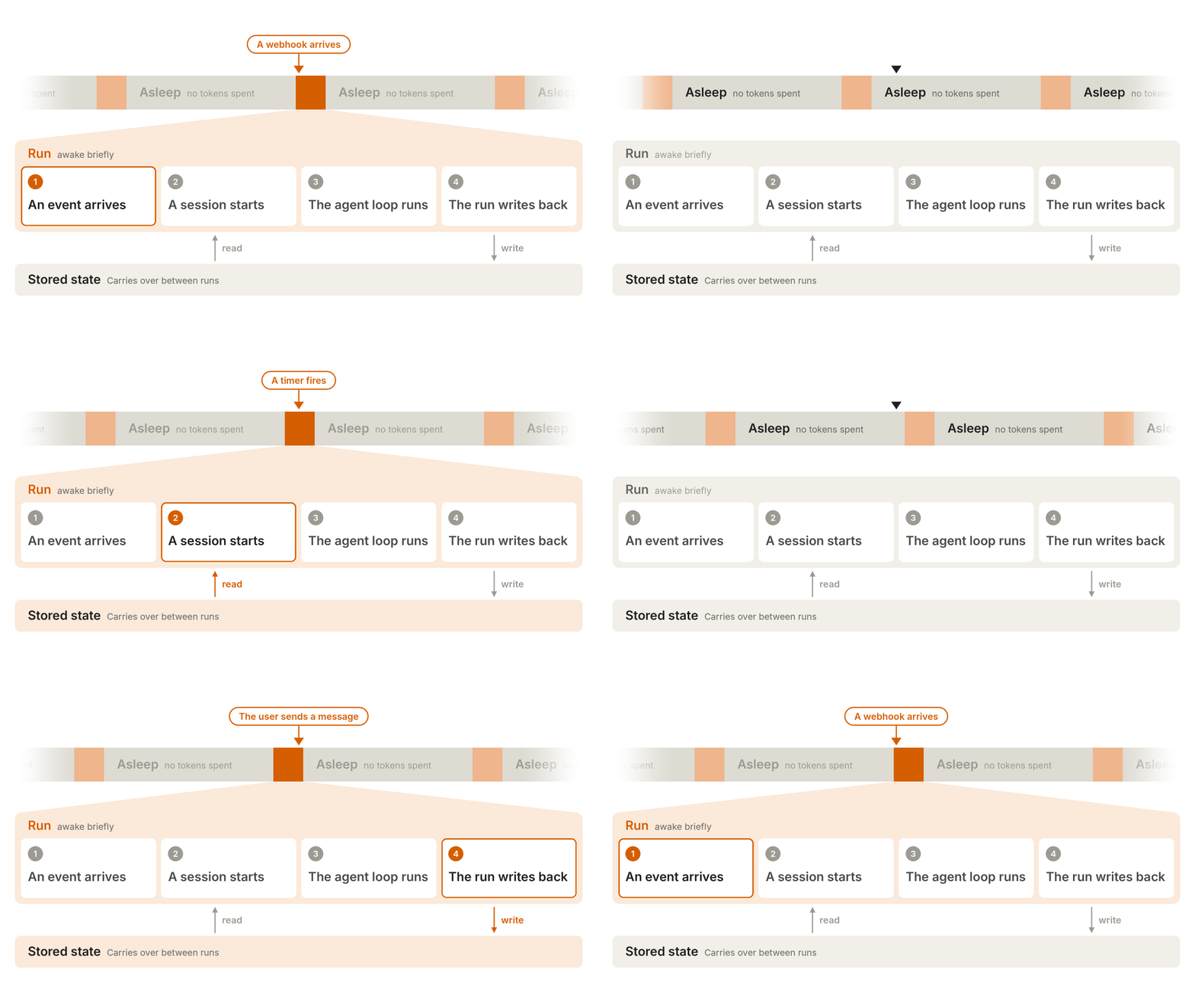
Building always-on agents
Because the latest models have better judgment, and because intelligence is getting cheaper, always-on agents are seeing a bit of a resurgence, explains Anthropic's William Hu in a tour of the architecture. "Each stretch of work is called a run: the agent receives an event, completes its task, and then saves information about what happened. A run works inside a session, which is the transcript of messages and tool calls. Once the run is finished, the agent goes back to sleep, and the cycle repeats indefinitely."
Most highlighted YouTube Video of the week
Stop Doing Agent Archaeology on Your Team's Code - Richard Feldman, Delta
Handing off half-finished agent work leaves the next person guessing, says Delta and Zed builder Richard Feldman. "We're just sort of doing this agent archaeology where I go trying to dig back into the history of what happened using these little clues that we have in the little commit snapshots... this is just a big waste of time because the information was there at some point."
Most highlighted Twitter Thread of the week
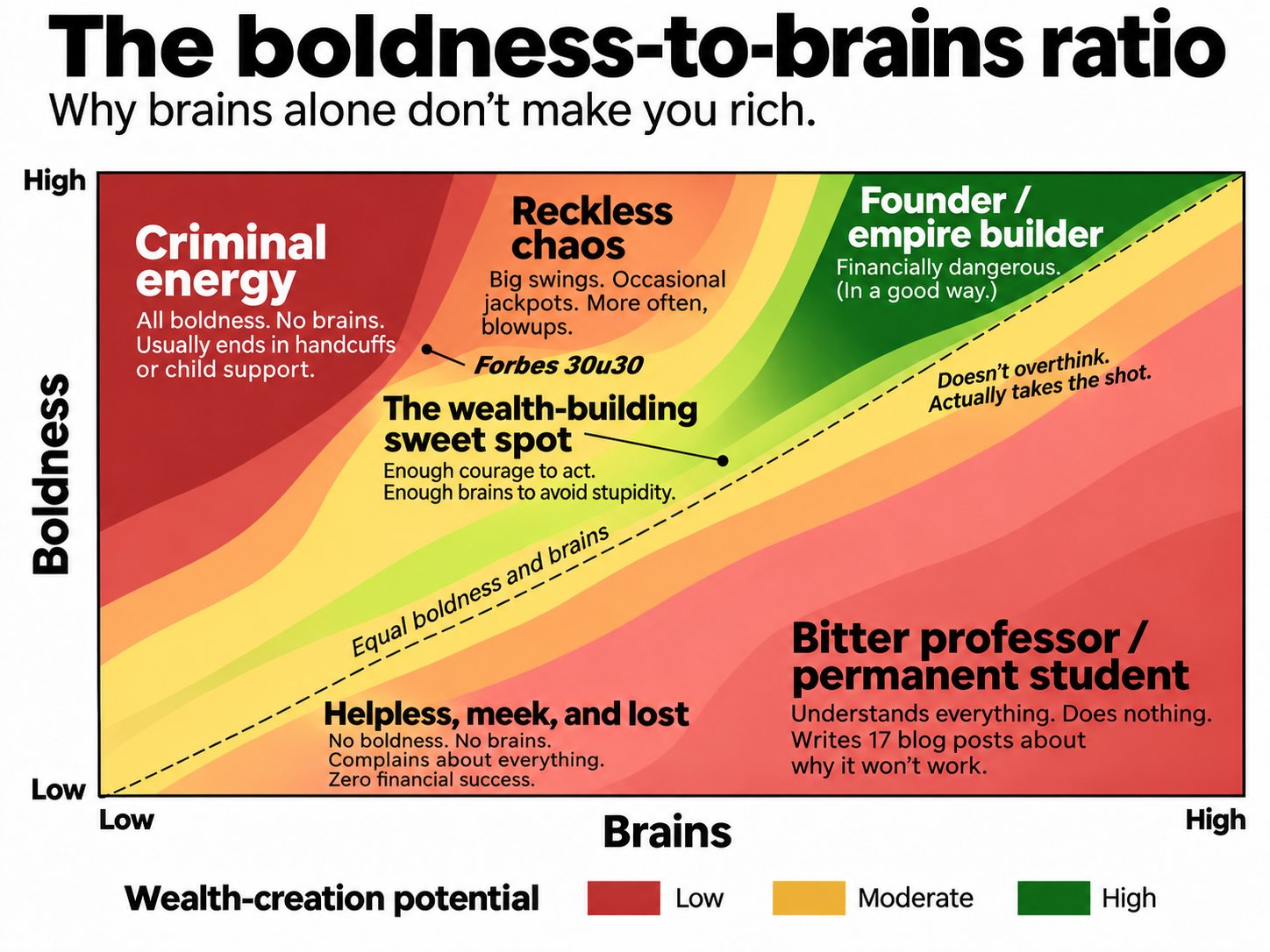
i learnt this lesson this year
Lauren Tan, on the team behind Grok Bot, shares a graphic from Lauris where the visual does most of the talking: the boldness-to-brains ratio. Her take: "Don't ask if you should do the thing. do it, then come back with a demo or something tangible."
Most highlighted PDF of the week
Primer: An AI Framework for Instructor-Centered Educational Simulation Creation
Wharton's open-source Primer lets teachers turn their expertise into AI-run simulations, write Ethan Mollick and colleagues. Students role-play against an AI character with its own motives, or teach a concept to an AI that doesn't yet grasp it. "At their best, [educational simulations] let students practice consequential decisions, inhabit complex roles, receive feedback, and encounter the kind of ambiguity that is difficult to reproduce outside of direct, real-life experience. They are especially valuable when the instructional goal is to apply foundational knowledge under pressure, explain concepts to others, negotiate competing priorities, respond to unexpected questions, or reason within a textured context."
Hand-picked book of the week
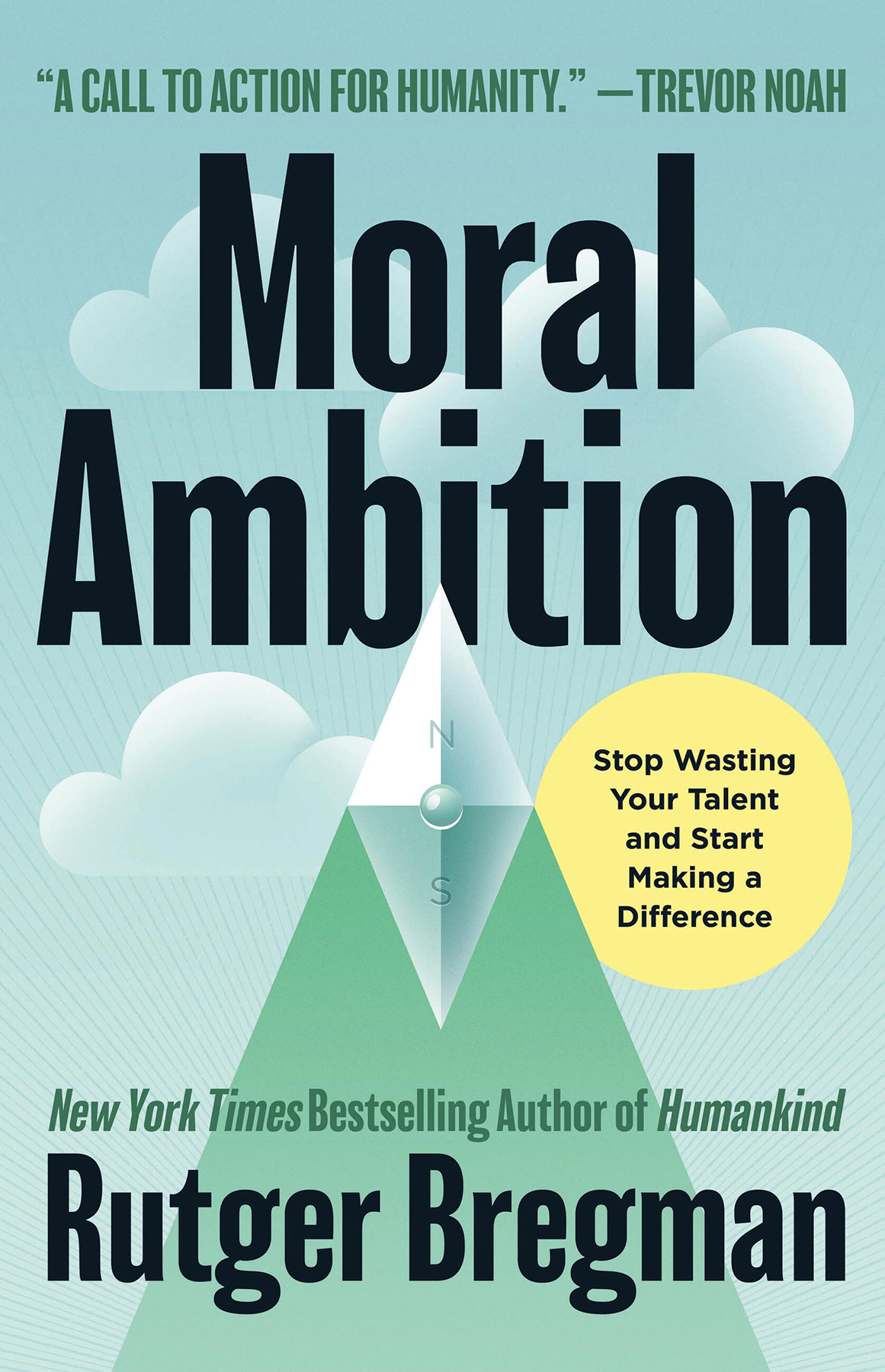
Moral Ambition
In 2001, neuroscientists scanned the brain of Matthieu Ricard, a Buddhist monk with more than 60,000 hours of meditation, and the press crowned him the happiest man in the world.
Historian Rutger Bregman opens Moral Ambition with Ricard as a foil: thirty years of full-time work spent inside his own head. This isn't a guide to a happier life but Bregman's case for pointing a working life at problems that actually matter.
"You don’t do good things because you’re a good person. You become a good person by doing good things."
Readers in the US can grab the full ebook for $2.99 through the end of November wherever ebooks are sold, including our very own Readwise Books.
Handpicked RSS feed of the week
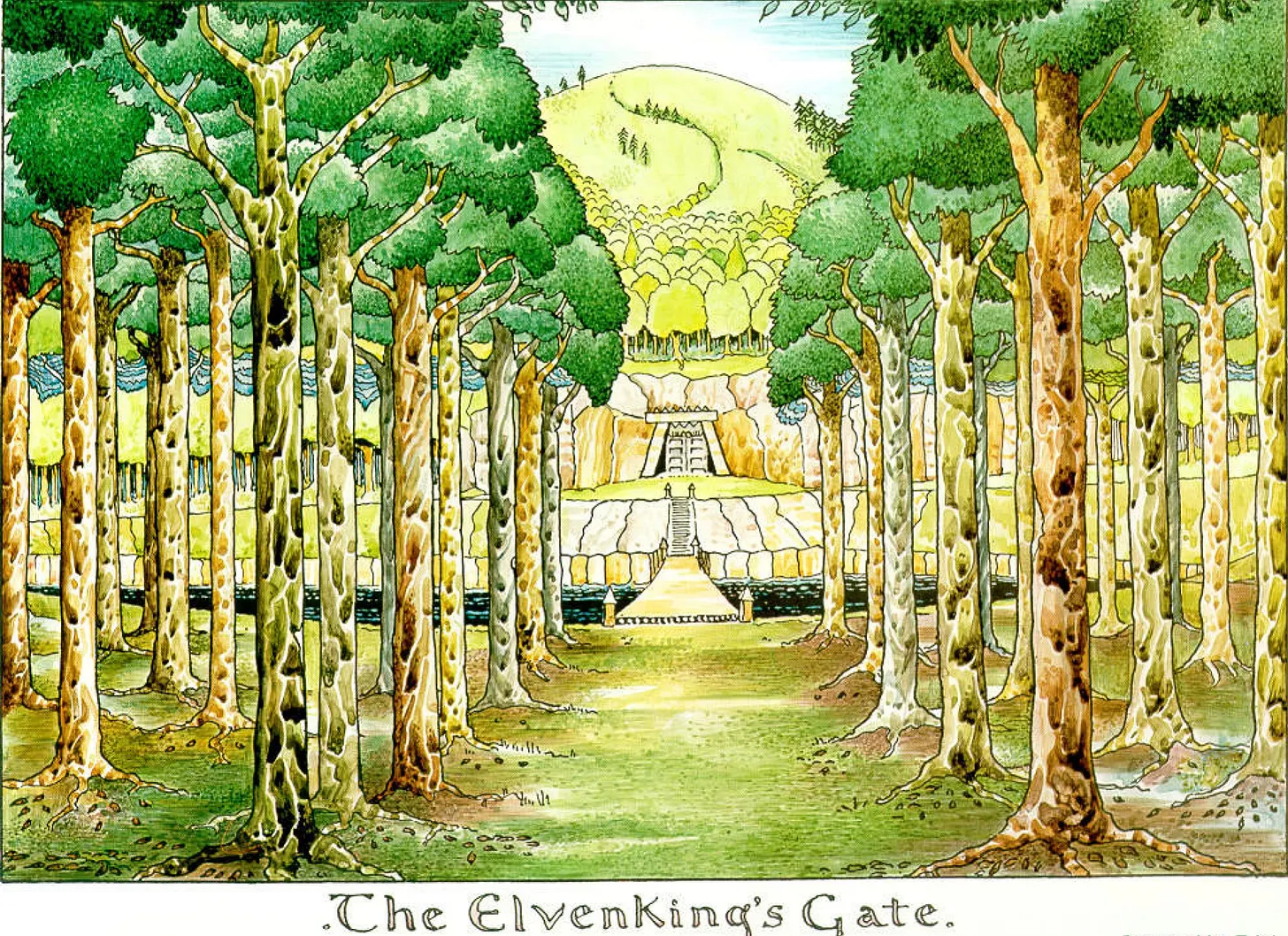
Beauty is Truth
James Lucas writes Beauty is Truth, a Substack known for its deep dives on the stories behind treasured pieces of art. From Tolkien Painted the Real Middle-earth: "Before Middle-earth belonged to everyone and grew dear to so many hearts, it belonged to an Oxford professor with a paintbrush, who was working out what lay over the next hill before his characters got there."