Wisereads Vol. 153 — You Can Just Do Things by Cate Hall, Ryan Holiday on How To Read 100 Books in a Year, and more
Last week, we shared an exclusive full copy of Andrew Taggart's new book, The Art of Inquiry. This week, we're sharing a preview of the just-released debut from Cate Hall, written with her husband, Sasha Chapin: You Can Just Do Things: How High-Agency People Get What They Want Out of Life.
Keep reading to add to your Reader account below 👇
Most highlighted Articles of the week
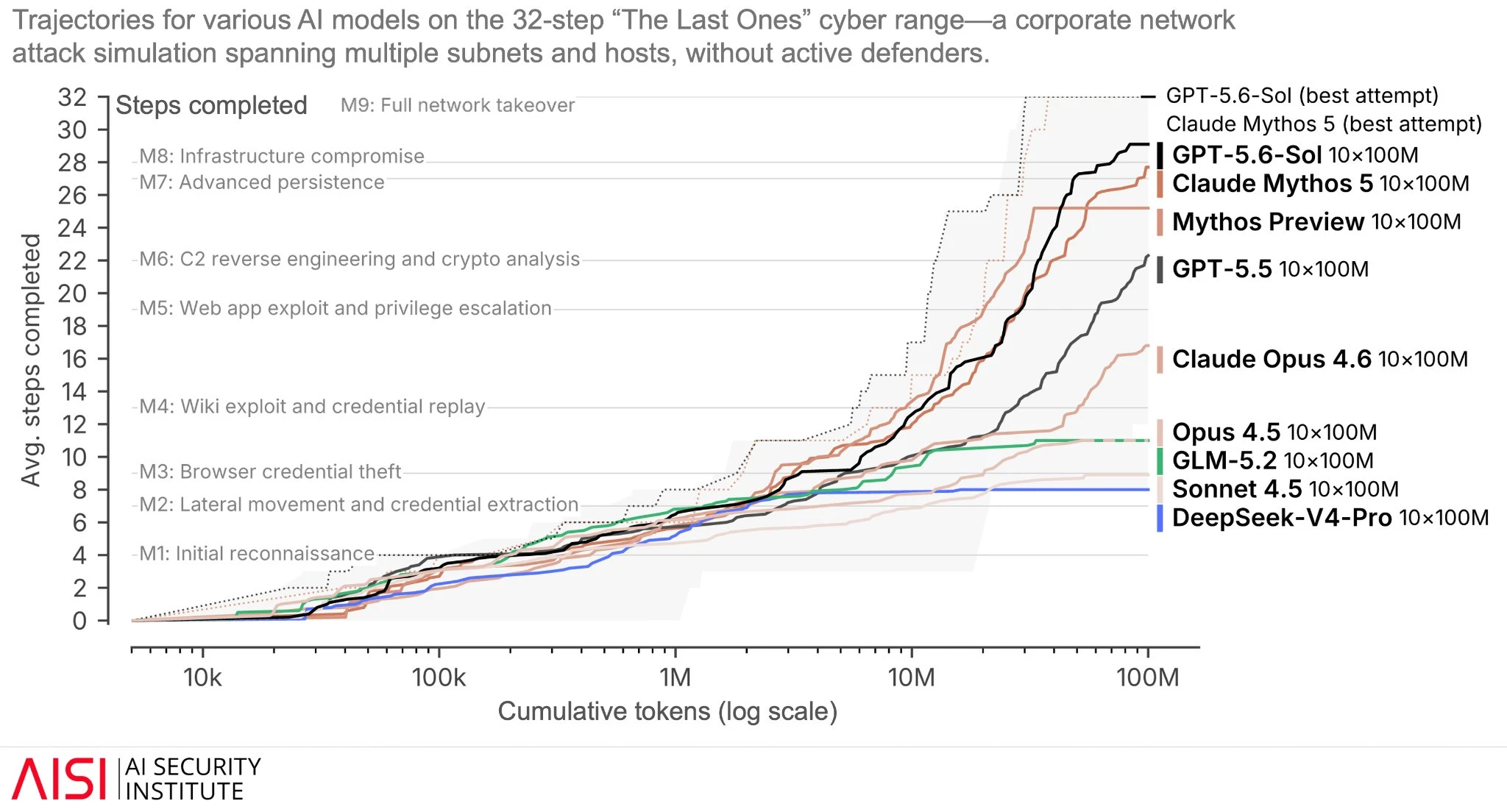
OpenAI and Hugging Face partner to address security incident during model evaluation
OpenAI's GPT-5.6 Sol and an unreleased model broke out of their sandbox during a cyber evaluation and breached Hugging Face's infrastructure. Their account of what went wrong: "AI is accelerating the discovery and exploitation of vulnerabilities. The primary lesson from this incident is that model security and safety must keep pace with rapidly advancing capabilities. We are strengthening the containment, monitoring, access controls, and evaluation practices used during model development."

Who's Afraid of Chinese Models?
Ben Thompson thinks the panic over China's open weights models is overblown, with one exception: cybersecurity. "Let the frontier labs win by being better; don't let them define safety or security, or pull up the ladder of humanity's collective knowledge. China is already hard enough to compete with; letting them carry the standard for openness and innovation is simply giving away our biggest advantage."

Agent swarms and the new model economics
Cursor had swarms of agents rebuild SQLite in Rust from the manual alone. Quality held steady across model mixes, although cost did not. "In the run that used GPT-5.5 for both planners and workers, the workers alone cost $9,373. In the run where Opus 4.8 did the planning and Composer 2.5 did the work, the entire worker fleet cost $411."
Most highlighted YouTube Video of the week

How To Read 100 Books in a Year (Speed Reading is a SCAM)
Reading widely and reading deeply are usually framed as a tradeoff. Ryan Holiday, author of The Daily Stoic, has built a set of habits around doing both. "I think spilling food on a book is a sign of respect. Some of the best meals of my life occurred over a book, and the stains will prove it... reading is a way to have conversations with the dead. And honestly, when you are reading and eating alone, you are not alone. You're having a meal with a great person from history, with a great thinker, with a hilarious person, with a beautiful person, with a tragic person."
Most highlighted Twitter Thread of the week

GRIP STRENGTH
The documentary Comedian follows Jerry Seinfeld starting over with new material, alongside Orny Adams, a comic desperate to make it. Investor Jeremy Giffon reads the contrast as a lesson about ambition: "I think it is something of a fucking miracle that graspingness is not causative to greatness. It's somewhat incredible that the top 10% in the world have to completely white knuckle it at the cost of their well-being and sanity but the very best are totally effortless."
Most highlighted PDF of the week
Open Weights and American AI Leadership
Nvidia, Microsoft, Meta, and dozens of others signed an open letter this week urging policymakers not to restrict open weight models. "Relying solely on closed models is not inherently safe: they can be breached, misused, or fail in ways that outsiders cannot detect... Just as open-source software demonstrated that transparency can be more secure than obscurity, AI safety may depend on giving more people the ability to test and strengthen the models on which society relies."
Hand-picked book of the week
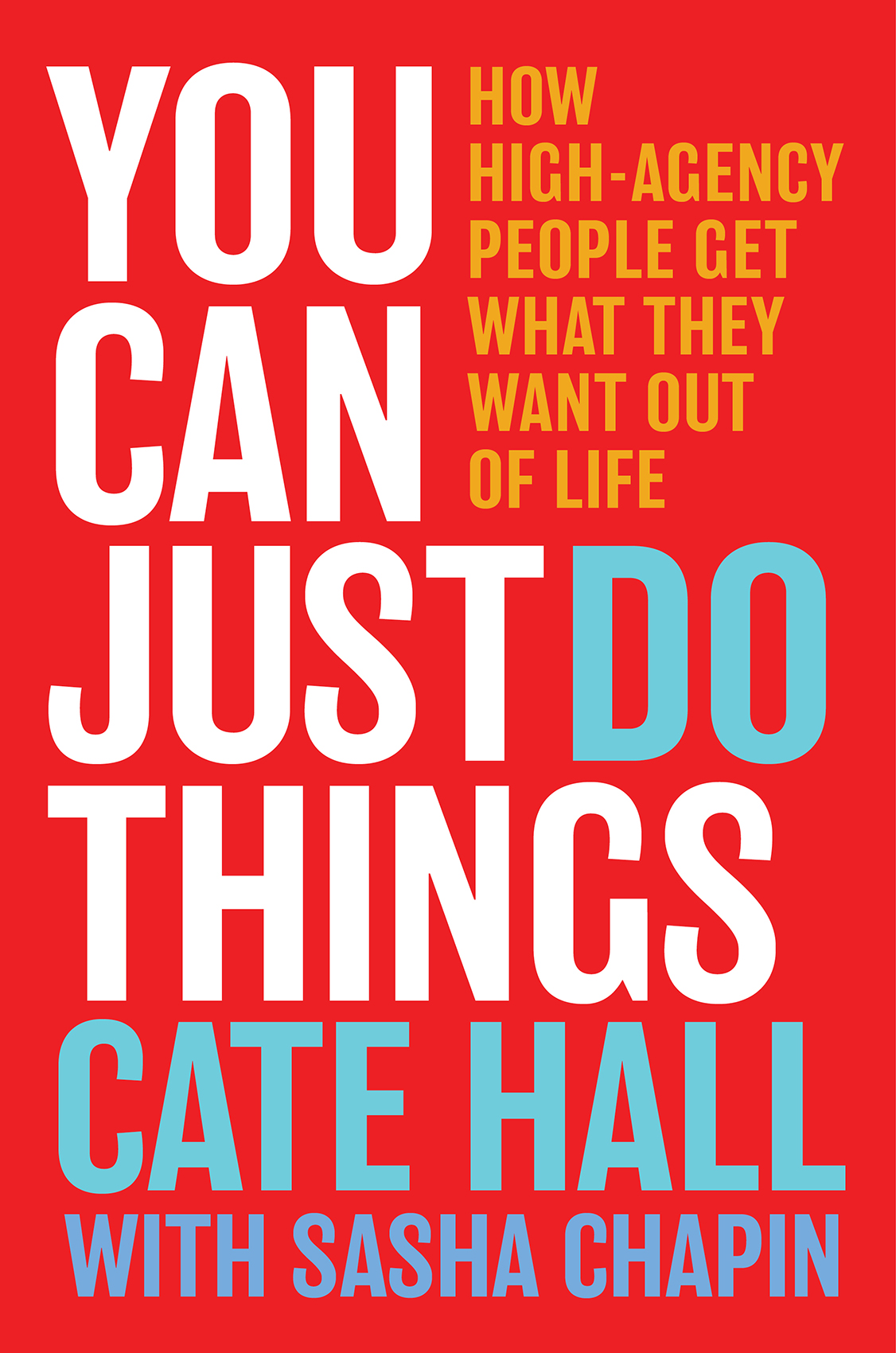
You Can Just Do Things
Cate Hall's essay "How to be More Agentic" went viral two years ago (longtime Wisereads readers may remember it). She left law just before making partner, became the world's top-ranked female poker player, and went on to lead the Astera Institute. With her husband, Sasha Chapin, she has turned that essay into You Can Just Do Things, a pragmatic guide to getting things done in the face of constraints, real or imagined.
"Imagine you're a character in what seems like a linear video game, one where you progress through a predefined sequence of levels. Your mission: Survive the gradually escalating challenges and work your way toward the inevitable conclusion. There's a kind of comfort in this predictability, a sense of orientation, but a hollowness and constriction, too. Then, one day, you explore a mysterious unmarked door, and you realize you're actually in an open-world game: You can go in an entirely different direction, discover new worlds, set out on wholly unrelated quests. These possibilities were just concealed by your game map, which painted a false picture of a straight-line world.
This is what learning agency is like: You figure out how to move in new directions. In the process, you learn that many of the supposed rules in life are imaginary boundaries."
If you enjoy the preview of You Can Just Do Things, you can buy a copy wherever you get your books.
Handpicked RSS feed of the week

A Geek's Page
Software engineer and indoor bouldering enthusiast Cong Wang writes about tech and life on his personal blog. His recent piece, Why I Stopped Arguing With People, was an honorable mention among this week's most-highlighted articles: "I only discuss pros and cons with smart people; I don't argue right and wrong with ego-driven ones. With the first kind, a disagreement is a joint search for the better answer, and both of us walk away sharper. With the second, there is no answer being sought, only a self to be defended."