Wisereads Vol. 121 — Chop Wood, Carry Water by Andrew Taggart, The New Yorker on performative reading, and more
Last week, we shared a new addition to the Standard Ebooks catalogue, a selection of Isaac Asimov’s collected short science fiction stories. This week, we're sharing an exclusive full debut from practical philosopher, Andrew Taggart: Chop Wood, Carry Water.
Keep reading to add to your Reader account below 👇
Most highlighted Articles of the week

The Curious Notoriety of "Performative Reading"
When authenticity is a top value, reading Infinite Jest at the bar might raise eyebrows, but should it? The New Yorker considers: "Performative reading has emerged as a suspicious activity not because reading books is suspect but because being beheld reading a book is understood to be yet another way for one to market himself, to portray to the world that he is indeed deeper and more expansive than his craven need for attention—demonstrated by reading a difficult book in public—suggests."

Why Does A.I. Write Like … That?
Beyond the em dash and the word "delve," there are hallmarks of AI writing that make essayist Sam Kriss cringe. "It knows that good writing involves subtlety: things that are said quietly or not at all, things that are halfway present and left for the reader to draw out themselves. So to reproduce the effect, it screams at the top of its voice about how absolutely everything in sight is shadowy, subtle and quiet. Good writing is complex. A tapestry is also complex, so A.I. tends to describe everything as a kind of highly elaborate textile."

Using LLMs at Oxide
Oxide Computer Company cofounder Bryan Cantrill sets guidelines for using LLMs in the workplace, warning employees against using AI for writing. "LLM-generated writing undermines the authenticity of not just one’s writing but of the thinking behind it as well. If the prose is automatically generated, might the ideas be too?"
Most highlighted YouTube Video of the week

Give Me 9 Minutes, I'll Make You AI-Native
Move from "AI Literate" to "AI Native" by adopting a few habits from Jeff Su: keep a prompt library, leave breadcrumbs, and plan tasks. "The rule of thumb here is for any project that will take more than an hour, spend 5 to 10 minutes mapping the steps and tagging which ones are AI or manual. For the productivity nerds out there, this is a classic example of sharpening the axe, where spending a few minutes on planning up front saves hours of work later."
Most highlighted Twitter Thread of the week

Don't think of LLMs as entities but as simulators
Andrej Karpathy is back with a practical tip for prompting AI: "For example, when exploring a topic, don't ask: 'What do you think about xyz'? There is no 'you'. Next time try: 'What would be a good group of people to explore xyz? What would they say?'"
Most highlighted PDF of the week
Is It A Bubble?
Drawing on writing from Derek Thompson, Ben Thompson, Byrne Hobart, Tobias Huber, and others, Oaktree Capital founder Howard Marks examines the possibility of an AI bubble from an investing perspective. "'Mean-reversion bubbles' – in which markets soar on the basis of some new financial miracle and then collapse – destroy wealth. On the other hand, 'inflection bubbles' based on revolutionary developments accelerate technological progress and create the foundation for a more prosperous future, and they destroy wealth. The key is to not be one of the investors whose wealth is destroyed in the process of bringing on progress."
Hand-picked book of the week
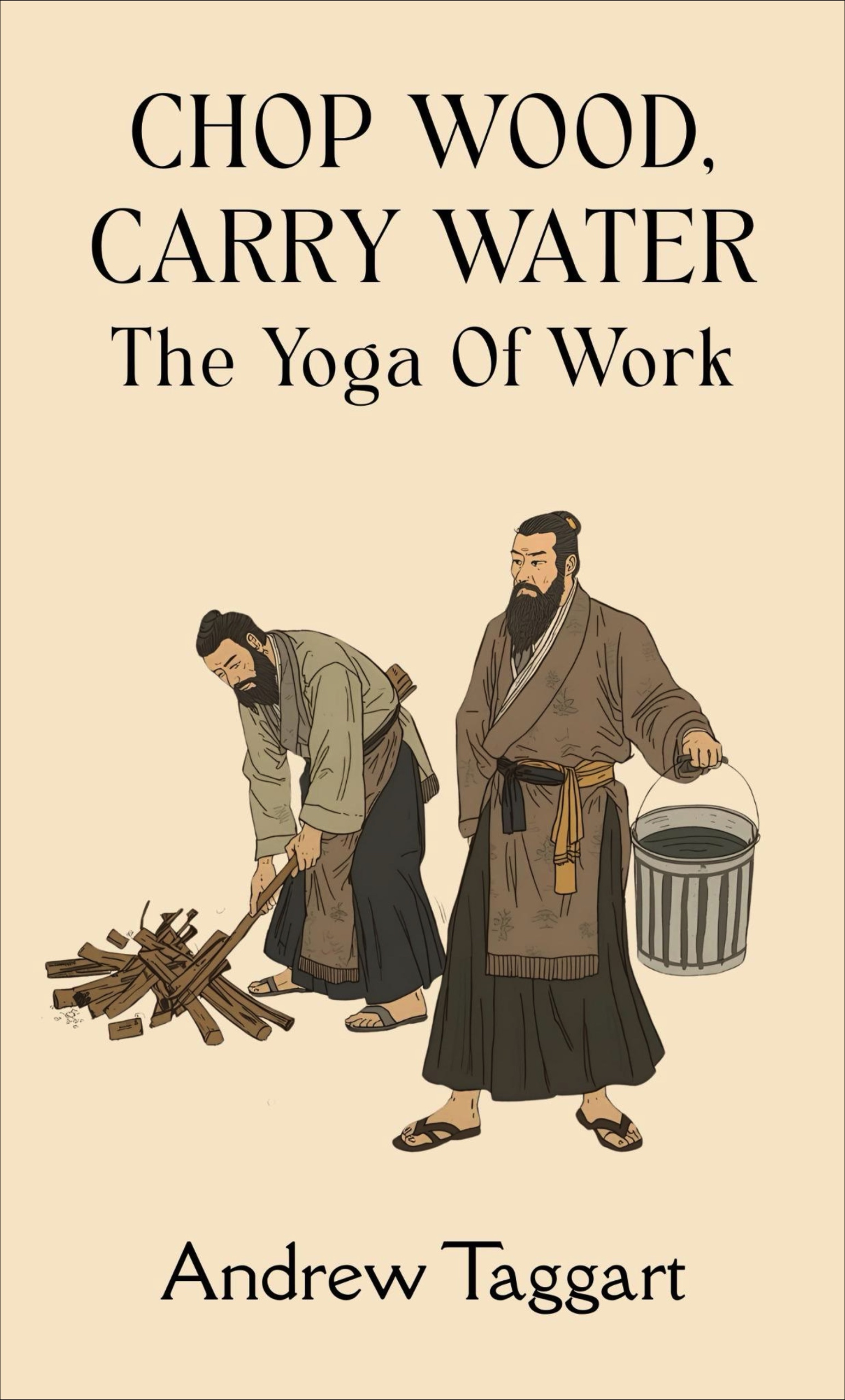
Chop Wood, Carry Water
You might already be familiar with Andrew’s practice without realizing it through another author we’ve featured: Paul Millerd of Good Work, who was set on the proverbial Pathless Path after considering Andrew’s question: "If work dominated your every moment, would life be worth living?" In Chop Wood, Carry Water, Andrew carries that inquiry forward with a practical aim: to help readers meet the inescapable, mundane tasks of daily life with careful attention, until the heaviness begins to dissolve and something steadier takes its place.
"On the contrary, what is felt by the one who truly grasps the essence of the yoga of work is a quiet beauty, an energy that’s unfolding through seamless activity. For such a one, there is not just ease but also love."
We’re honored Andrew is sharing a full copy of Chop Wood, Carry Water: The Yoga of Work exclusively with Wisereads readers. If it resonates, you can show your support by purchasing a physical copy, checking out his newsletter, or exploring his teaching on his personal website.
Handpicked RSS feed of the week

Pathways To The Tao
This week's author, Andrew Taggart, is a "practical philosopher". He’s a gentle guide for anyone who's asking fundamental questions about what it means to lead a life well lived. From I’m Already Perfect—No and Yes: "Humility’s good buddy is honesty, which calls for a reckoning with one’s sticky tendencies as well as with the apparent paradoxes of any great teaching. One such paradox is, yes, that you are ultimately perfect—now go sweep the floor."